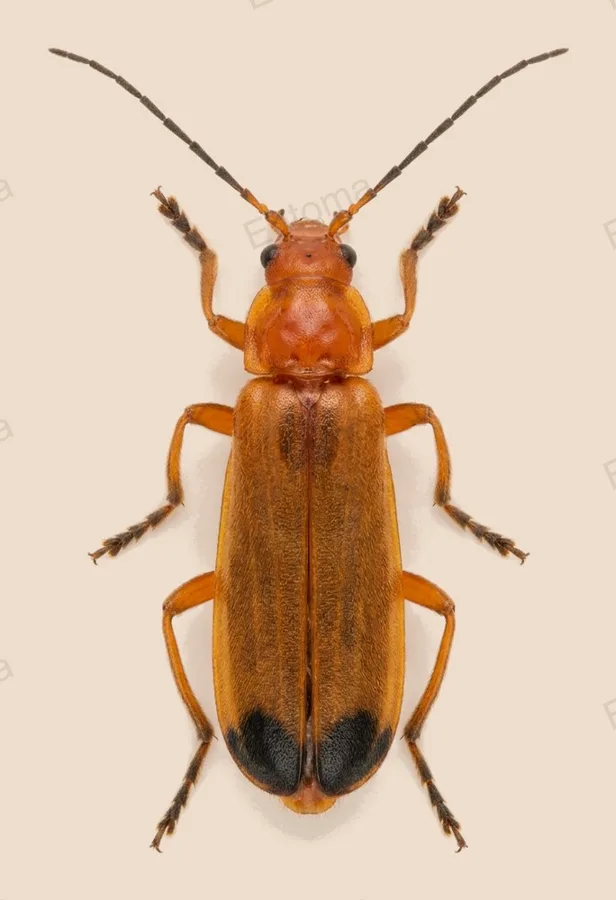
Common red soldier beetle
Its English nickname is the hogweed bonking beetle. In July many flat white flower heads carry a mating pair.
| Where | Meadows, hedgerows and road verges, on white umbellifer flowers |
|---|---|
| Size | 8 to 10 mm |
| When | June to August |
The adults feed on the flowers they sit on, taking pollen, nectar and the small insects that visit them. They stay in plain sight all day.
The larvae live at the base of long grasses and hunt ground-dwelling invertebrates such as slugs and snails, which makes the species a quiet friend of gardeners. The name soldier beetle is said to come from the red coats of old British soldiers.
Traits
Habitat
Meadow
Colour
Red, Black
Active
Day
To people
Harmless
Activity through the year
Often confused with
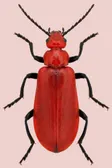
Flatter and red all over, with saw-toothed antennae and no black wing tips.
Questions
Is the Common red soldier beetle dangerous to people?
The Common red soldier beetle is harmless to people.
When can you see the Common red soldier beetle?
The Common red soldier beetle can be seen from June to August, by day.
Sources en.wikipedia.orgnaturespot.org.uk
Plate retouched from a museum specimen photo by Aleksi Lapakko, Finnish Biodiversity Information Facility, CC BY 4.0, GBIF Licence
Report a mistake in this entry
Beetles›Soldier beetles›Rhagonycha
Last updated 2026-10-17. Every entry is checked against published sources.