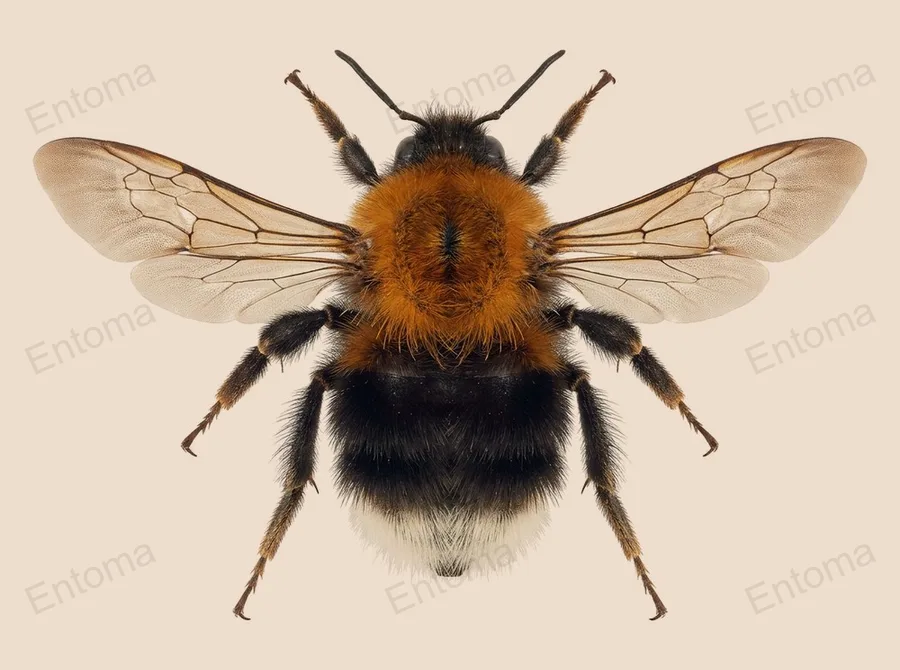
Tree bumble bee
Newly mated queens often nest in old bird boxes, and males then gather outside in a buzzing cloud waiting for fresh queens to emerge.
| Where | Gardens, parks, woodland edges, nest boxes |
|---|---|
| Size | 14 to 18 mm body length |
| When | March to August |
It has a foxy ginger thorax, a black abdomen, and a clean white tail, a combination no other common bumblebee in its range shares.
It has spread quickly in recent decades, nesting readily in roof spaces, bird boxes and compost heaps rather than underground.
Queens of the Tree bumble bee emerge from hibernation in late February or March, and each starts a nest on her own. The species can have two generations in a year. Colonies can be large, and one authority suggests there may be up to 400 workers.
Traits
Habitat
Garden
Colour
Orange, Black, White
Active
Day
To people
Mild
Generally docile away from the nest, but workers can defend an occupied bird box or nest site vigorously.
Activity through the year
Often confused with
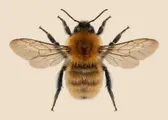
The common carder bee is ginger all over with no black-and-white abdomen, unlike the tree bumblebee's black body and white tail.
Questions
Is the Tree bumble bee dangerous to people?
Mild. Generally docile away from the nest, but workers can defend an occupied bird box or nest site vigorously.
When can you see the Tree bumble bee?
The Tree bumble bee can be seen from March to August, by day.
Sources bumblebeeconservation.orgwildlifetrusts.orgbuglife.org.uken.wikipedia.orgbwars.com
Plate retouched from a photo by Arnstein Staverløkk/Norsk institutt for naturforskning, CC BY 3.0, Wikimedia Commons Licence
Report a mistake in this entry
Bees, wasps and ants›Bees and bumblebees›Bombus
Last updated 2026-10-17. Every entry is checked against published sources.